Shop by category
Shop by goal
Build your own test
Pick from 90+ biomarkers and create a panel tailored to your goals.
Start buildingPick from 90+ biomarkers and create a panel tailored to your goals.
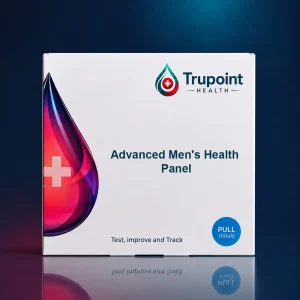
Start building28-marker men's health panel covering organ function, cholesterol, testosterone, PSA, thyroid, and vitamin D in a single collection.
or 4 interest-free payments of £24.75 with Klarna
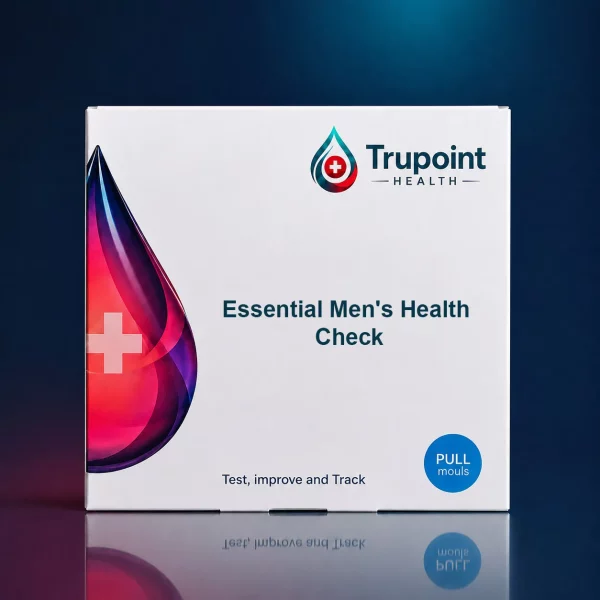
A 28-marker essential health panel tailored for men — covering full blood count, organ function, cholesterol, testosterone, thyroid, PSA.
The Essential Men’s Health Check is designed as a comprehensive annual baseline for men who want to understand their health across multiple systems without waiting for symptoms to appear. It combines 28 biomarkers across seven domains.
Full blood count: screens for anaemia, infection, and haematological conditions. Organ function: liver (six markers including ALT, AST, GGT, bilirubin, albumin, total protein) and kidney (creatinine, eGFR, urea, uric acid). Cardiovascular: total cholesterol, LDL, HDL, triglycerides, and non-HDL cholesterol. Hormonal: total testosterone and SHBG (with calculated free testosterone). Thyroid: TSH. Cancer screening: PSA (prostate-specific antigen). Nutritional: vitamin D (25-OH).
This panel is suitable as an annual check from age 25 onwards, and is particularly relevant for men over 40 who have not had a recent comprehensive blood assessment. Home fingerstick kit available; mobile phlebotomist or clinic appointment recommended for best testosterone accuracy. GMC-physician reviewed results within 3 to 5 working days.
Understand what each marker measures, why it matters, and what the science says — not just a list of numbers.
Oxygen-carrying protein in red blood cells; low levels indicate anaemia, high levels may suggest dehydration or polycythaemia.
Learn more about HaemoglobinTotal red blood cells per volume of blood; assesses oxygen transport capacity.
Proportion of blood volume occupied by red blood cells; elevated in dehydration and polycythaemia.
Total immune cell count; elevated in infection or inflammation, low in bone marrow suppression.
Clotting cells; low levels increase bleeding risk, high levels may suggest reactive thrombocytosis.
Average red blood cell size; distinguishes iron deficiency anaemia (small cells) from B12/folate deficiency (large cells).
Learn more about MCV (Mean Corpuscular Volume)Liver enzyme released with hepatocyte damage; elevated in fatty liver, alcohol excess, and hepatitis.
Learn more about ALT (Alanine Aminotransferase)Enzyme present in liver and muscle; elevated ALT-to-AST ratio distinguishes hepatic from muscle sources.
Learn more about AST (Aspartate Aminotransferase)Sensitive marker for alcohol use, bile duct disease, and early liver stress.
Learn more about GGT (Gamma-Glutamyl Transferase)Biliary and bone enzyme; elevated in bile duct obstruction, bone disease, or liver infiltration.
Learn more about Alkaline Phosphatase (ALP)Breakdown product of haem; elevated in liver disease, haemolysis, or biliary obstruction.
Learn more about Bilirubin (Total)Liver-produced protein reflecting synthetic function and nutritional status; low in chronic liver disease.
Learn more about AlbuminMuscle metabolism waste product cleared by the kidneys; elevated levels indicate impaired renal function.
Learn more about CreatinineCalculated estimate of kidney filtration efficiency; the primary clinical marker for chronic kidney disease staging.
Learn more about eGFR (Estimated Glomerular Filtration Rate)Nitrogen waste product of protein metabolism; elevated in dehydration, high protein intake, or kidney impairment.
Learn more about UreaPurine metabolism end product; elevated levels cause gout and are associated with metabolic syndrome.
Learn more about Uric AcidOverall cholesterol burden; context depends on the breakdown between HDL, LDL, and triglycerides.
Learn more about Total CholesterolLow-density lipoprotein; primary driver of atherosclerotic cardiovascular disease risk.
Learn more about LDL CholesterolHigh-density lipoprotein; cardioprotective; higher levels reduce cardiovascular risk.
Learn more about HDL CholesterolBlood fats reflecting carbohydrate and alcohol intake; elevated in metabolic syndrome and cardiovascular risk.
Learn more about TriglyceridesAll atherogenic lipoprotein fractions combined; a more complete cardiovascular risk indicator than LDL alone.
Learn more about Non-HDL CholesterolPrimary male androgen; affects energy, libido, muscle mass, bone density, and mood.
Carrier protein for testosterone; used to calculate free testosterone and assess bioavailable androgen.
Prostate gland protein elevated in benign enlargement, inflammation, and prostate cancer; age-specific reference ranges apply.
Learn more about PSA (Prostate-Specific Antigen)Primary screening marker for thyroid dysfunction; hypothyroidism in men causes fatigue, weight gain, and testosterone-like symptom overlap.
Essential for testosterone production, bone health, immune function, and mood regulation; widely deficient in UK men.
Learn more about Vitamin D (25-OH)This panel is designed for adults who want a comprehensive, evidence-based picture of their metabolic health — not a GP referral panel.
Men aged 25 and over wanting a comprehensive annual health baseline
Those over 40 who have not had a thorough blood assessment in recent years
Men experiencing fatigue, weight gain, or reduced performance
Those with a family history of cardiovascular disease, prostate issues, or diabetes
Testosterone accuracy is highest when the sample is collected before 10 am following a fasted venous draw; fingerstick collection is available but may produce marginally less precise testosterone values. PSA can be elevated by benign prostatic hyperplasia, urinary tract infection, recent ejaculation, or vigorous cycling — all these factors should be avoided in the 48 hours before testing. A normal PSA does not exclude prostate cancer and should not be used as a standalone screening tool without clinical context. TSH alone does not assess full thyroid function; if thyroid symptoms are present, the Thyroid Function Plus panel is recommended. eGFR in this panel uses the CKD-EPI formula and is not intended for acute kidney injury assessment.
From order to physician-reviewed report in as little as three working days.
A simple finger-prick home kit, posted to your door — no appointment, no needle, and a laboratory-standard sample.
Adults 18+ in mainland UK. Not suitable if you have had a transfusion in the last 3 months.
Order anytime; kit dispatched within 24 hours Mon–Fri.
Allow 24–48 hours for sample transit on top of lab processing time.
Every test is processed in a UKAS ISO 15189-accredited laboratory, overseen by GMC-registered physicians, and governed by UK GDPR. No overseas processing, no offshore data.
Follow these guidelines to ensure accurate, reproducible results. Most markers are sensitive to recent food, exercise, and sleep.
Can't find your answer? Our clinical support team is available Monday to Friday, 9am–5pm.
Contact supportProstate-specific antigen (PSA) is a protein produced by prostate gland cells. Elevated levels can indicate benign prostatic hyperplasia (BPH), prostatitis, or prostate cancer. While PSA is not a perfect screening test — it can be elevated in benign conditions and normal in some early cancers — it provides useful baseline data. Men aged 50 and over, or younger men with a family history of prostate cancer, benefit most from monitoring PSA trends over time. A single elevated reading requires follow-up rather than alarm; your physician report will interpret it in the context of your age and risk profile.
A low testosterone result, particularly when accompanied by symptoms such as fatigue, low libido, mood changes, and reduced muscle mass, warrants a GP consultation. Your physician report will indicate whether the finding is clinically significant and what next steps are appropriate. Options explored by a GP include lifestyle assessment (sleep, exercise, weight, stress), repeat testing to confirm, and if appropriate, referral to an endocrinologist. Testosterone replacement therapy (TRT) is available in the UK on prescription for confirmed, symptomatic hypogonadism — private self-supplementation should never be undertaken based on a single test result.
GGT (gamma-glutamyl transferase) is a sensitive liver enzyme that rises with regular alcohol consumption, even at moderate levels. It is also elevated in non-alcoholic fatty liver disease (NAFLD), biliary tract disease, and in those taking enzyme-inducing medications. An isolated elevated GGT in an otherwise healthy man with no other liver enzyme abnormalities often reflects alcohol intake or early fatty liver. Reducing alcohol for 4 to 6 weeks and retesting typically normalises GGT if alcohol is the primary cause — and provides a useful functional indicator of liver health.
In the UK, NHS targets for cardiovascular risk reduction are: total cholesterol below 5.0 mmol/L; LDL below 3.0 mmol/L (below 1.8 mmol/L for those at high cardiovascular risk); HDL above 1.0 mmol/L in men; and triglycerides below 1.7 mmol/L. Non-HDL cholesterol below 3.9 mmol/L is also used as a comprehensive atherogenic target. These are population-level reference points; your physician report will assess your individual profile in the context of your overall cardiovascular risk factors, including blood pressure, family history, and lifestyle.
Vitamin D receptors are found in Leydig cells — the testosterone-producing cells in the testes — and research consistently shows a positive correlation between vitamin D status and testosterone levels in men. Several intervention studies have found that vitamin D supplementation in deficient men raises total testosterone, particularly when baseline deficiency is moderate to severe. Vitamin D deficiency is extremely common in the UK, particularly during autumn and winter. Monitoring and correcting vitamin D status is a simple, evidence-based step that may support healthy testosterone levels alongside other lifestyle factors.
Annual testing is appropriate for most men over 40 as a comprehensive health baseline. Younger men in good health may retest every 2 years unless specific concerns arise. If any results are outside the reference range, the physician report will recommend a specific retesting timeline — for example, after dietary changes for cholesterol, or after B12 supplementation for anaemia. PSA should ideally be trended over time: a rising PSA — even within the normal range — may be clinically meaningful and warrants medical review.