
Six-marker liver function panel covering hepatocyte damage, biliary markers, and synthetic function for comprehensive liver assessment.
or 4 interest-free payments of £9.75 with Klarna
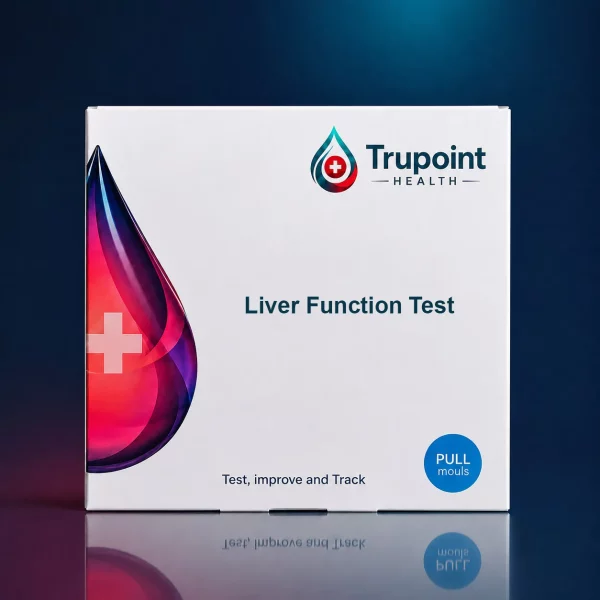
A six-marker liver function panel measuring ALT, AST, GGT, alkaline phosphatase, bilirubin, and albumin.
The liver is the body’s primary metabolic organ — processing nutrients, producing proteins, metabolising medications and toxins, and producing bile for digestion. Liver function tests (LFTs) are among the most commonly requested blood tests in medicine because liver damage often has no early symptoms, yet is detectable through enzyme and protein markers years before clinical complications appear.
This six-marker liver function panel covers the three key domains of liver assessment:
Hepatocyte damage markers: ALT (alanine aminotransferase) and AST (aspartate aminotransferase) are enzymes released when liver cells are damaged. ALT is more liver-specific; an elevated ALT-to-AST ratio distinguishes liver causes from muscle or cardiac sources.
Biliary markers: GGT (gamma-glutamyl transferase) is highly sensitive for alcohol use and biliary disease. Alkaline phosphatase (ALP) rises in bile duct obstruction and bone disease. Total bilirubin reflects the liver’s ability to conjugate and excrete haem breakdown products.
Synthetic function: albumin is the most important liver-produced protein and reflects long-term liver synthetic capacity.
Home fingerstick kit available. GMC-physician reviewed results within 3 to 5 working days.
Understand what each marker measures, why it matters, and what the science says — not just a list of numbers.
The most liver-specific enzyme; elevated in fatty liver disease, hepatitis, and medication-related liver damage.
Found in liver and muscle; an elevated ALT-to-AST ratio distinguishes hepatic from muscle or cardiac sources.
Highly sensitive for alcohol use, biliary disease, and early metabolic liver stress; often the first marker to elevate in regular drinkers.
Bile duct and bone enzyme; elevated in biliary obstruction, primary biliary cholangitis, and bone disorders.
Haem breakdown product conjugated and excreted by the liver; elevated in liver disease, haemolysis, and biliary obstruction.
Main liver-produced protein; low albumin reflects impaired synthetic capacity in chronic liver disease or malnutrition.
This panel is designed for adults who want a comprehensive, evidence-based picture of their metabolic health — not a GP referral panel.
People who drink alcohol regularly and want to monitor liver health
Those on long-term medications (statins, methotrexate, paracetamol) requiring liver monitoring
Individuals with risk factors for non-alcoholic fatty liver disease (obesity, diabetes)
Anyone with fatigue, abdominal discomfort, or jaundice wanting initial liver screening
This panel assesses the core liver function markers but does not include viral hepatitis markers (hepatitis A, B, or C serology), clotting studies (INR/prothrombin time), or imaging. Normal liver enzymes do not exclude all forms of liver disease; early cirrhosis can be present with normal or only mildly elevated enzymes. ALP is present in bone as well as liver; an elevated ALP requires differentiation between hepatic and bone sources using GGT as a discriminator. Albumin is a long-half-life protein and only falls when liver synthetic function is significantly impaired; it is not a sensitive early marker of acute liver damage. Please discuss significantly elevated results with your GP promptly.
From order to physician-reviewed report in as little as three working days.
Three options designed to fit your schedule, location, and preference — all producing a laboratory-standard sample.
Adults 18+ in mainland UK. Not suitable if you have had a transfusion in the last 3 months.
Order anytime; kit dispatched within 24 hours Mon–Fri.
Allow 24–48 hours for sample transit on top of lab processing time.
Adults 18+ within 20 miles of a serviced city centre.
Mon–Sun, 06:00–20:00. Next-day booking typical.
Sample reaches the lab within 24 hours of collection.
Adults 16+ with photo ID. Paediatric draws by appointment at selected sites.
Mon–Fri, with Saturday hours at most metropolitan locations.
Samples processed same-day at the receiving clinic.
Every test is processed in a UKAS ISO 15189-accredited laboratory, overseen by GMC-registered physicians, and governed by UK GDPR. No overseas processing, no offshore data.
Follow these guidelines to ensure accurate, reproducible results. Most markers are sensitive to recent food, exercise, and sleep.
Can't find your answer? Our clinical support team is available Monday to Friday, 9am–5pm.
Contact supportNon-alcoholic fatty liver disease (NAFLD) is a spectrum of liver conditions — from simple fat accumulation in liver cells (steatosis) to NASH (non-alcoholic steatohepatitis, where inflammation accompanies the fat) to cirrhosis. It is the most common liver condition in the UK, strongly associated with obesity, diabetes, and metabolic syndrome. ALT and GGT are the most sensitive routine blood markers for early NAFLD, though they can be normal even when liver fat is present. A mildly elevated ALT (above 35 IU/L in men, above 25 IU/L in women) in the context of risk factors warrants further investigation, including liver ultrasound.
GGT (gamma-glutamyl transferase) is an enzyme involved in glutathione metabolism. Alcohol is a potent enzyme inducer — it upregulates the microsomal enzymes involved in its own metabolism, including GGT. As a result, even moderate regular alcohol consumption can significantly elevate GGT levels. GGT typically returns to normal within 2 to 8 weeks of alcohol abstinence, making it a useful marker for monitoring compliance with alcohol reduction. Unlike ALT and AST, which require actual cell damage, GGT can be elevated purely from enzyme induction without hepatocyte injury.
Elevated ALT without obvious explanation (covert liver disease) has a wide differential including: non-alcoholic fatty liver disease (extremely common in people with obesity or metabolic syndrome); medication-induced liver injury (statins, methotrexate, anti-epileptics, some supplements, and herbal remedies); alcohol (even reported alcohol intake often underestimates actual consumption); unrecognised viral hepatitis (particularly hepatitis C, which can be asymptomatic for decades); thyroid disease (hypothyroidism can cause mild ALT elevation); and muscle damage from intense exercise (elevated AST and CK, with normal GGT). Your physician report will help distinguish these patterns.
The impact depends on the amount and pattern of consumption. GGT is the most sensitive early marker — it rises with regular moderate drinking before ALT becomes elevated. ALT and AST typically rise when there is actual hepatocyte injury, which occurs with heavier consumption (particularly binge drinking) or chronically elevated intake over years. Stopping or significantly reducing alcohol for 4 to 6 weeks and retesting allows a clear picture of alcohol’s contribution — GGT will fall markedly within 4 weeks if alcohol is the primary cause. This abstinence test is a useful and actionable clinical intervention.
Mild, isolated ALT elevations (up to 3 times the upper reference limit) are common on statins and usually clinically insignificant — large-scale trials have shown statin-related hepatotoxicity is extremely rare. If ALT is elevated above 3 times the upper limit, most guidelines recommend stopping the statin and investigating the cause before restarting. This panel provides the baseline LFT against which any changes on statin therapy can be monitored. If your GP has prescribed a statin and wants baseline liver monitoring, or if you want to monitor liver health while on a statin, this panel is an appropriate tool.
Albumin is produced exclusively by the liver and has a half-life of around 20 days, meaning it only falls significantly when liver synthetic function has been impaired for a sustained period. Low albumin is therefore a marker of chronic liver disease, cirrhosis, or severe hepatic impairment — not acute liver damage. It can also be low in malnutrition, nephrotic syndrome (where albumin is lost in the urine), or chronic inflammatory states. A mildly low albumin in an otherwise healthy individual may reflect poor nutritional intake rather than liver disease. Your physician will interpret albumin in the context of all six liver markers together.