
Modern cardiovascular risk assessment goes beyond cholesterol. Know your full risk profile — including the markers most GPs do not routinely check.
or 4 interest-free payments of £44.75 with Klarna
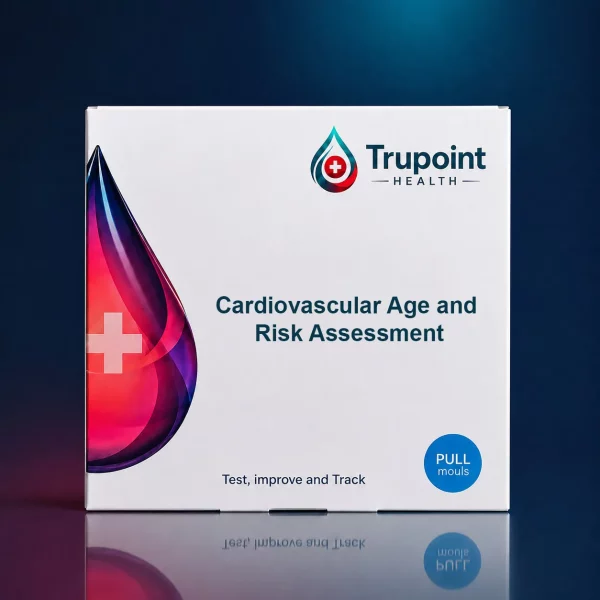
Comprehensive cardiovascular risk profiling covering the full lipoprotein panel, Lp(a), ApoB, homocysteine, hs-CRP, fibrinogen, and metabolic markers.
Cardiovascular disease remains the leading cause of death in the UK, yet most of the risk accumulates silently over decades before a first event. Standard NHS cholesterol checks measure total and LDL cholesterol but miss many of the modern markers that cardiovascular researchers now regard as superior predictors of risk. This panel moves beyond the basics: ApoB counts atherogenic lipoprotein particles directly; Lp(a) identifies the genetic cardiovascular risk present in approximately 20 percent of the population; fibrinogen reflects both inflammatory and thrombotic burden; and the metabolic markers (fasting insulin, HOMA-IR, HbA1c) capture the insulin resistance that drives much of modern cardiovascular disease. Homocysteine adds a methylation and vascular endothelium dimension. Together these markers give you the most complete picture of cardiovascular risk available outside a specialist cardiology clinic. All results are reviewed by a GMC-registered physician.
Understand what each marker measures, why it matters, and what the science says — not just a list of numbers.
This panel is designed for adults who want a comprehensive, evidence-based picture of their metabolic health — not a GP referral panel.
Adults over 40 with a family history of heart attack, stroke, or sudden cardiac death before 65
Anyone who has been told their standard cholesterol is borderline and wants a more complete picture
People with hypertension, diabetes, or obesity seeking a comprehensive cardiometabolic baseline
Individuals who want to understand their risk before initiating statin therapy or other lipid-lowering treatment
Those engaged in active cardiovascular risk reduction who want objective tracking of their progress
This panel provides a comprehensive biochemical cardiovascular risk assessment but does not assess arterial anatomy, calcification, blood pressure, ECG findings, or body composition. The QRISK3 algorithm used in UK primary care integrates multiple clinical variables beyond lipids; the markers in this panel inform but do not replicate a formal QRISK3 calculation. Lp(a) is reported in nmol/L (mass-based reporting); conversion between nmol/L and mg/dL can produce apparent discrepancies between laboratories. Fibrinogen is mildly elevated as an acute-phase reactant during any active illness, pregnancy, or inflammatory condition and should be interpreted in that context. Fasting insulin requires a strict 10-hour fast for accuracy; any non-adherence significantly inflates the reading.
From order to physician-reviewed report in as little as three working days.
Venous draw recommended for this panel.
Water only. Strict fasting essential for lipids and insulin.
Within 24 hours of receipt.
Physician commentary in 3 to 5 working days.
Three options designed to fit your schedule, location, and preference — all producing a laboratory-standard sample.
Adults 18+ in mainland UK. Not suitable if you have had a transfusion in the last 3 months.
Order anytime; kit dispatched within 24 hours Mon–Fri.
Allow 24–48 hours for sample transit on top of lab processing time.
Adults 18+ within 20 miles of a serviced city centre.
Mon–Sun, 06:00–20:00. Next-day booking typical.
Sample reaches the lab within 24 hours of collection.
Adults 16+ with photo ID. Paediatric draws by appointment at selected sites.
Mon–Fri, with Saturday hours at most metropolitan locations.
Samples processed same-day at the receiving clinic.
Every test is processed in a UKAS ISO 15189-accredited laboratory, overseen by GMC-registered physicians, and governed by UK GDPR. No overseas processing, no offshore data.
Follow these guidelines to ensure accurate, reproducible results. Most markers are sensitive to recent food, exercise, and sleep.
Can't find your answer? Our clinical support team is available Monday to Friday, 9am–5pm.
Contact supportEach atherogenic lipoprotein particle — LDL, VLDL, IDL, and Lp(a) — contains exactly one ApoB molecule. Measuring ApoB therefore directly counts the number of particles that can embed in arterial walls and cause atherosclerosis. LDL cholesterol measures the mass of cholesterol carried by LDL particles, not the number of particles. In people with insulin resistance, metabolic syndrome, or type 2 diabetes, LDL particles are often small and cholesterol-depleted, meaning particle count (ApoB) is disproportionately high relative to LDL cholesterol. These individuals may have a misleadingly normal LDL-C while carrying substantial atherogenic risk — a discordance that ApoB measurement resolves.
Elevated Lp(a) (above 75 nmol/L or approximately 30 mg/dL) is a significant independent cardiovascular risk factor. Unlike LDL cholesterol, Lp(a) does not respond to statins, dietary changes, or exercise. The current standard recommendation is to aggressively manage all other modifiable cardiovascular risk factors — blood pressure, LDL, diabetes, smoking, obesity — to compensate for the non-modifiable Lp(a) risk. Emerging therapies specifically targeting Lp(a), including siRNA and antisense oligonucleotide treatments, are in late-stage clinical trials and may become available within the next few years. Aspirin has some evidence in high-Lp(a) individuals; discuss with your cardiologist or GP.
Yes, and it is one of the more straightforwardly modifiable cardiovascular risk markers. Elevated homocysteine (above 15 micromol/L is high; 10 to 15 is borderline) responds reliably to B12, folate, and B6 supplementation in most individuals with nutritional causes of hyperhomocysteinaemia. A specific genetic variant (MTHFR C677T) reduces the efficiency of folate metabolism and can cause elevated homocysteine that responds better to methylfolate than standard folic acid. Dietary improvements — increasing green vegetables and reducing ultra-processed food — also support homocysteine lowering. Achieving homocysteine below 10 micromol/L is the target associated with lowest vascular risk.
Not necessarily. Approximately 15 to 20 percent of people who suffer a first heart attack have LDL cholesterol in the normal range. This cardiovascular risk paradox is explained by factors that a standard cholesterol panel misses: elevated Lp(a), high ApoB with normal LDL-C (due to small dense LDL particles), elevated hs-CRP indicating inflammatory risk, insulin resistance driving atherogenesis, or elevated homocysteine contributing to endothelial damage. Comprehensive cardiovascular risk assessment accounts for all of these dimensions, not just the LDL value that appears on a standard blood test.
The case for preventative assessment is strongest precisely because cardiovascular disease is clinically silent until an event occurs. The atherosclerotic process begins in the third and fourth decades of life and progresses for decades before producing a heart attack or stroke. By the time symptoms appear, significant arterial disease is usually established. Comprehensive biomarker assessment allows risk stratification and intervention while the underlying pathology is still reversible or arrestable through lifestyle and pharmacological means. The preventative cardiological recommendation from bodies including the British Heart Foundation and NICE is that cardiovascular risk assessment should begin by age 40 and continue periodically thereafter.