
Ten-marker thyroid panel: full function, autoimmune antibodies, and the nutritional co-factors that drive thyroid performance.
or 4 interest-free payments of £22.25 with Klarna
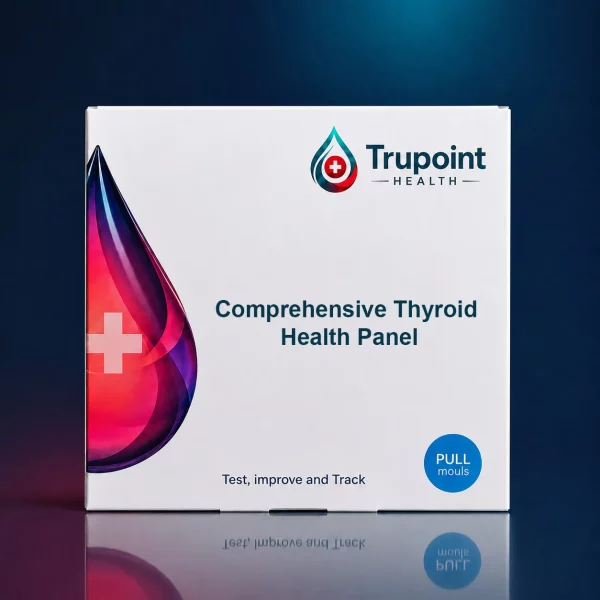
A ten-marker panel combining full thyroid function and autoimmune antibodies with key nutritional serum biomarkers — serum vitamin D, ferritin, active B12.
Thyroid function does not exist in isolation. The gland’s ability to produce hormones, convert T4 to active T3, and mount an effective immune defence depends critically on nutritional status. Low serum ferritin is associated with impaired thyroid hormone production. Low serum vitamin D is associated with elevated thyroid antibodies. Low serum B12 and folate can produce symptoms that overlap with hypothyroidism. Elevated CRP indicates systemic inflammation that can suppress thyroid conversion.
The Comprehensive Thyroid Health Panel measures all three thyroid axis markers, both antibodies (TPO and TG), and four nutritional biomarkers — vitamin D, ferritin, active B12, and folate — plus CRP as an inflammation marker. This gives a genuinely comprehensive view of thyroid health rather than a fragment of it.
It is particularly useful for people already taking levothyroxine who still have symptoms, since suboptimal nutrient levels are a frequent and reversible cause of persistent hypothyroid-like symptoms. Sample collected at home by fingerstick kit, mobile phlebotomist, or partner clinic. GMC-physician reviewed results within 3 to 5 working days.
Understand what each marker measures, why it matters, and what the science says — not just a list of numbers.
Pituitary hormone that regulates thyroid output; the primary screening marker for hypo- and hyperthyroidism.
Primary thyroid gland secretion; precursor to the active T3 form used by tissues throughout the body.
Active thyroid hormone that drives cellular metabolism, energy, and temperature regulation.
Key marker for Hashimoto's thyroiditis; elevated in around 95% of autoimmune thyroid cases.
Complementary autoimmune marker that increases sensitivity for detecting TPO-negative autoimmune disease.
Fat-soluble vitamin essential for immune regulation; deficiency is strongly associated with elevated thyroid antibodies.
Iron storage protein; low ferritin directly impairs thyroid hormone synthesis and T4-to-T3 conversion.
Learn more about FerritinBiologically available fraction of vitamin B12; deficiency causes fatigue and neurological symptoms that closely mimic hypothyroidism.
B-vitamin essential for DNA synthesis and methylation pathways that support thyroid hormone metabolism.
Learn more about FolateLiver-produced inflammation marker; elevated CRP can suppress peripheral T4-to-T3 conversion and worsen thyroid symptoms.
This panel is designed for adults who want a comprehensive, evidence-based picture of their metabolic health — not a GP referral panel.
People on levothyroxine who still experience fatigue, brain fog, or weight issues
Those wanting to understand the full nutritional picture behind their thyroid symptoms
Women with Hashimoto's disease seeking a comprehensive monitoring panel
Anyone with multiple thyroid risk factors wanting a thorough baseline assessment
This panel provides a thorough assessment of thyroid function, autoimmunity, and key nutritional co-factors but does not include Reverse T3, magnesium, zinc, or selenium — nutrients that also play roles in thyroid metabolism. It does not assess TSH receptor antibodies (TRAb), which are specific to Graves' disease. Elevated CRP indicates systemic inflammation but does not identify the source; further investigation may be required. Nutritional deficiencies identified in this panel should be addressed under medical guidance rather than through self-supplementation alone. This test does not replace endocrine specialist input for complex thyroid conditions.
From order to physician-reviewed report in as little as three working days.
Three options designed to fit your schedule, location, and preference — all producing a laboratory-standard sample.
Adults 18+ in mainland UK. Not suitable if you have had a transfusion in the last 3 months.
Order anytime; kit dispatched within 24 hours Mon–Fri.
Allow 24–48 hours for sample transit on top of lab processing time.
Adults 18+ within 20 miles of a serviced city centre.
Mon–Sun, 06:00–20:00. Next-day booking typical.
Sample reaches the lab within 24 hours of collection.
Adults 16+ with photo ID. Paediatric draws by appointment at selected sites.
Mon–Fri, with Saturday hours at most metropolitan locations.
Samples processed same-day at the receiving clinic.
Every test is processed in a UKAS ISO 15189-accredited laboratory, overseen by GMC-registered physicians, and governed by UK GDPR. No overseas processing, no offshore data.
Follow these guidelines to ensure accurate, reproducible results. Most markers are sensitive to recent food, exercise, and sleep.
Can't find your answer? Our clinical support team is available Monday to Friday, 9am–5pm.
Contact supportFerritin is the body’s iron storage protein. Iron is required at several points in thyroid hormone synthesis — including the function of the enzyme thyroid peroxidase, which is responsible for producing T4. Additionally, iron is needed for the conversion of T4 to the active T3 in peripheral tissues. When ferritin is low (even within the technically ‘normal’ lab range), thyroid hormone production and conversion can be impaired, leading to hypothyroid-like symptoms even when TSH appears normal. Many people with Hashimoto’s have suboptimal ferritin that, when optimised, significantly improves their wellbeing.
Multiple studies have shown a significant association between vitamin D deficiency and elevated thyroid antibodies, particularly TPO antibodies. Vitamin D plays an important role in immune regulation and modulating autoimmune responses. Several clinical trials have found that correcting vitamin D deficiency reduces TPO antibody levels in people with Hashimoto’s thyroiditis, though the evidence is not yet strong enough to establish a definitive therapeutic recommendation. Measuring vitamin D alongside your antibodies allows you to identify and address this co-factor under medical guidance.
Yes, this panel is particularly relevant for people already taking levothyroxine who continue to experience symptoms such as fatigue, brain fog, weight gain, or mood changes despite a ‘normal’ TSH. Common reasons for persistent symptoms include: suboptimal T3 conversion (which this panel reveals via FT3), low ferritin impairing conversion, vitamin D or B12 deficiency mimicking hypothyroid symptoms, or ongoing autoimmune activity. The nutritional co-factor data in this panel can identify correctable causes of treatment-resistant symptoms.
Total B12 measures all forms of cobalamin in the blood, but not all of it is biologically available. Active B12 — also called holotranscobalamin — measures only the fraction that cells can actually take up and use. Total B12 can appear normal even when functional B12 status is poor, leading to deficiency symptoms being missed. Active B12 is a more sensitive early marker of deficiency and is especially relevant for older adults, vegans, and those taking proton pump inhibitors (PPIs). Since B12 deficiency symptoms closely overlap with hypothyroid symptoms, distinguishing the two is clinically important.
CRP is measured using a high-sensitivity assay in this panel. Values below 1 mg/L indicate low cardiovascular and inflammatory risk. Values between 1 and 3 mg/L suggest moderate risk and warrant lifestyle review. Values above 3 mg/L indicate elevated systemic inflammation that warrants further investigation to identify the source. Elevated CRP in the context of thyroid disease may reflect active autoimmune thyroid inflammation, but other causes — including infection, metabolic syndrome, or other autoimmune conditions — must also be considered. Your physician review will contextualise your CRP result.
For those with confirmed Hashimoto’s thyroiditis, monitoring every 6 to 12 months is a reasonable approach, depending on symptom stability and whether any interventions (nutritional, pharmaceutical, or lifestyle) are being trialled. If you are correcting a specific deficiency (e.g. ferritin or vitamin D), retesting 3 months after starting supplementation gives a useful indication of response. Always follow the guidance in your results report and coordinate your monitoring frequency with your GP or endocrinologist.
No. This panel provides rich data that supports clinical decision-making but does not replace the assessment of a qualified endocrinologist for complex or treatment-resistant thyroid conditions. If your results indicate significantly abnormal thyroid function, markedly elevated antibodies, or nutritional deficiencies requiring therapeutic intervention, our physician report will recommend appropriate next steps, which may include a GP consultation or specialist referral.